What Materials Were Ancient Chinese Bookmarks Made Of?
Share
For more than two millennia, bookmarks have been an integral part of Chinese scholarly culture. Long before paper became the dominant writing surface, Chinese readers and scribes developed sophisticated tools to mark their place in texts. The materials used for these bookmarks were not chosen arbitrarily — they reflected the dynasty's technological capabilities, the owner's social status, and the deep cultural reverence for learning and literature.
Primary Materials Used in Ancient Chinese Bookmarks
1. Bamboo and Wood (竹木)
Bamboo was among the earliest and most widespread materials for bookmarks in ancient China. Before paper, texts were written on bamboo strips (jiǎn, 简) bound together with cord. Thin, flat slivers of bamboo or wood were inserted between these strips to mark important passages. Bamboo was ideal due to its abundance, flexibility, and ease of carving.
- Dynasties: Shang, Zhou, Qin, Han
- Common forms: Flat strips, carved tablets, inscribed slips
- Decorative techniques: Ink inscription, lacquer coating, relief carving
2. Silk and Woven Fabric (丝绸)
As silk production flourished during the Han Dynasty, woven silk ribbons became a prestigious bookmark material. Silk bookmarks — known as shu qian (书签) in their ribbon form — were often embroidered with auspicious motifs such as dragons, phoenixes, lotus flowers, and classical poetry. They were lightweight, durable, and could be produced in vivid colors using natural dyes.
- Dynasties: Han, Tang, Song, Ming, Qing
- Common forms: Embroidered ribbons, tasseled silk strips, woven panels
- Decorative techniques: Embroidery (xiù), brocade weaving, natural dyeing
3. Bone and Ivory (骨与象牙)
Animal bone — particularly ox bone — and ivory from elephants were carved into flat, elegant bookmark shapes. These materials were prized for their smooth surface, which accepted fine engraving with precision. Ivory bookmarks were luxury items associated with the imperial court and high-ranking officials. Intricate scenes of landscapes, figures, and calligraphy were common decorative themes.
- Dynasties: Tang, Song, Ming, Qing
- Common forms: Flat carved panels, pointed-tip markers
- Decorative techniques: Micro-engraving, ink-rubbing into carved lines
4. Jade and Hardstone (玉石)
Jade (yù, 玉) held a uniquely sacred position in Chinese civilization — it symbolized virtue, purity, and immortality. Jade bookmarks were among the most prestigious objects a scholar could own. Nephrite and jadeite were the two primary jade types used, often shaped into thin rectangular plaques or ruyi-head forms. Jade bookmarks were frequently gifted by emperors to favored ministers as tokens of imperial favor.
- Dynasties: Han, Tang, Song, Ming, Qing
- Common forms: Flat rectangular plaques, ruyi-shaped markers
- Decorative techniques: Relief carving, openwork (lòu diāo), polishing
5. Bronze and Metal (铜与金属)
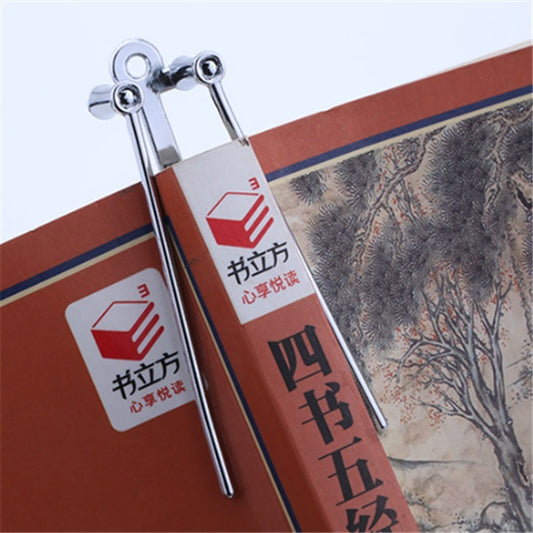
Bronze, gold, and silver were used to create durable, ornate bookmarks, particularly during the Tang and Song dynasties when metalworking reached extraordinary levels of refinement. Bronze bookmarks were often cast with decorative motifs and then gilded or inlaid with enamel. Gold and silver examples were exclusively imperial or aristocratic possessions.
- Dynasties: Zhou, Han, Tang, Song
- Common forms: Cast flat markers, clip-style holders
- Decorative techniques: Gilding, silver inlay, cloisonné enamel
6. Paper and Paperboard (纸)
After paper became widely available following Cai Lun's refinement of papermaking in the Eastern Han Dynasty (105 CE), paper bookmarks became common among ordinary scholars. These were often hand-painted or woodblock-printed with poetic verses, landscape scenes, or moral maxims. The Song Dynasty saw a flourishing of printed paper bookmarks as woodblock printing technology matured.
- Dynasties: Han (late), Tang, Song, Ming, Qing
- Common forms: Printed strips, painted panels, folded markers
- Decorative techniques: Woodblock printing, hand painting, calligraphy
7. Horn and Tortoiseshell (角与龟甲)
Buffalo horn and tortoiseshell were semi-translucent materials that could be heated and pressed into thin, flat shapes. Their natural patterning gave each bookmark a unique appearance. Tortoiseshell bookmarks were particularly fashionable during the Qing Dynasty among wealthy collectors and scholars.
- Dynasties: Ming, Qing
- Common forms: Thin flat strips, shaped panels
- Decorative techniques: Heat-molding, engraving, lacquer overlay
Comparative Overview by Material
| Material | Primary Dynasties | Social Class | Key Characteristics |
|---|---|---|---|
| Bamboo / Wood | Shang – Han | All classes | Abundant, carvable, earliest form |
| Silk / Fabric | Han – Qing | Scholar-gentry, aristocracy | Embroidered, colorful, flexible |
| Bone / Ivory | Tang – Qing | Officials, wealthy merchants | Smooth, engravable, prestigious |
| Jade / Hardstone | Han – Qing | Imperial, high nobility | Sacred symbolism, highest prestige |
| Bronze / Metal | Zhou – Song | Imperial, aristocracy | Durable, ornate, gilded |
| Paper | Han (late) – Qing | All classes | Printed, painted, widely accessible |
| Horn / Tortoiseshell | Ming – Qing | Wealthy collectors | Translucent, naturally patterned |
The Cultural Significance of Bookmark Materials
In ancient China, the material of a bookmark was never merely functional — it was a statement of identity, learning, and social standing. A bamboo bookmark signified a diligent student; a jade bookmark signified imperial favor or noble birth. The Confucian reverence for books and scholarship elevated the bookmark from a simple tool to a cultural artifact worthy of artistic investment.
During the Song Dynasty, the rise of the literati (wénrén) culture placed enormous value on refined scholarly objects — the wén fáng sì bǎo (Four Treasures of the Study: brush, ink, paper, inkstone) were joined by a broader ecosystem of elegant desk objects, including bookmarks. This period saw the greatest diversity of bookmark materials and decorative styles.
Frequently Asked Questions (FAQ)
Q: What is the oldest known material used for ancient Chinese bookmarks?
A: Bamboo is the oldest known material used for bookmark-like objects in ancient China. During the Shang and Zhou dynasties, thin bamboo slips were used to mark positions within bound bamboo-strip texts, predating paper by over a thousand years.
Q: Were jade bookmarks common in ancient China?
A: No — jade bookmarks were rare and exclusive to the imperial court and high nobility. Jade held deep spiritual and cultural significance in Chinese civilization, symbolizing virtue and immortality, which made jade bookmarks among the most prestigious scholarly objects one could possess.
Q: When did silk bookmarks first appear in China?
A: Silk bookmarks became prominent during the Han Dynasty (206 BCE – 220 CE), coinciding with the expansion of silk production along the Silk Road. Embroidered silk ribbon bookmarks remained fashionable through the Qing Dynasty, often featuring auspicious motifs and classical poetry.
Q: How were ancient Chinese paper bookmarks decorated?
A: Paper bookmarks in ancient China were decorated using woodblock printing, hand-painted calligraphy, and ink landscape scenes. During the Song Dynasty, advances in woodblock printing technology allowed for mass production of beautifully illustrated paper bookmarks accessible to a broader scholarly class.
Q: What materials were used for Chinese bookmarks during the Qing Dynasty?
A: The Qing Dynasty (1644–1912) saw the widest variety of bookmark materials, including silk embroidery, ivory carving, jade, tortoiseshell, paper, and lacquered wood. This period represented the peak of decorative bookmark craftsmanship in Chinese history, with many examples now preserved in museum collections worldwide.
Q: Did ancient Chinese bookmarks have any symbolic meaning?
A: Yes. The material, shape, and decorative motifs of ancient Chinese bookmarks carried rich symbolic meaning. Jade represented virtue and purity; bamboo symbolized resilience and scholarly integrity; lotus motifs on silk bookmarks signified moral purity; and dragon or phoenix imagery indicated imperial or noble status.
Q: Are ancient Chinese bookmark materials still used in modern bookmarks?
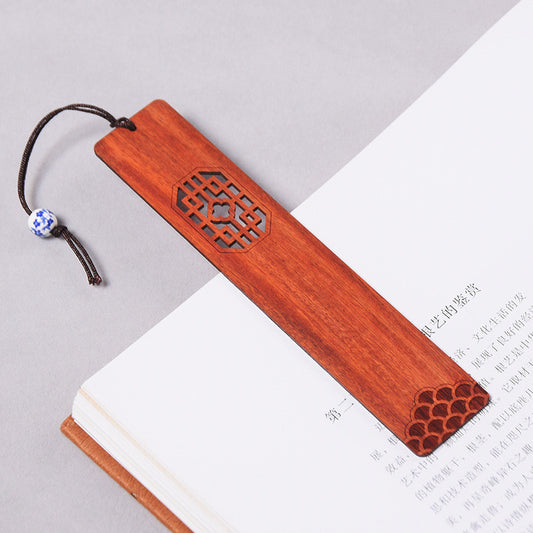
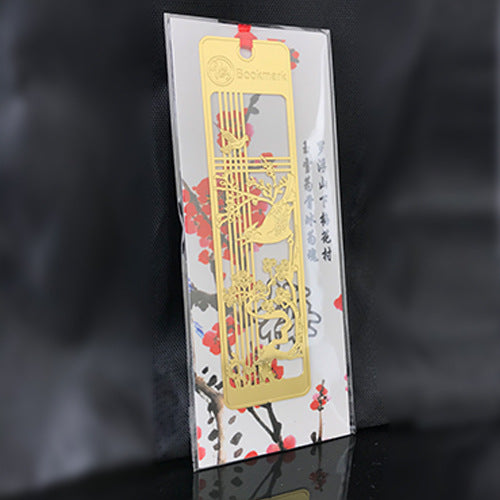
A: Yes — modern artisan bookmarks inspired by ancient Chinese traditions continue to use materials such as wood, metal, resin, and fabric. Contemporary Chinese bookmark makers often incorporate traditional motifs (plum blossoms, cranes, classical poetry) into laser-cut wood or cast metal designs, bridging ancient craftsmanship with modern aesthetics.